 South Africa - Institutional




Business & Industry views
Pulse check: the messy middle
What holds you when things get difficult
The Quick Take
- Most of the stories we tell about achievement skip the uncertain middle, yet that is where character is often formed
- What holds you through a difficult period is not abstract values, but concrete lines, ordinary discipline, and one or two people who will tell you the truth
- Women pay a particular tax for holding a firm position, which makes it essential to know the difference between being wrong and being inconvenient

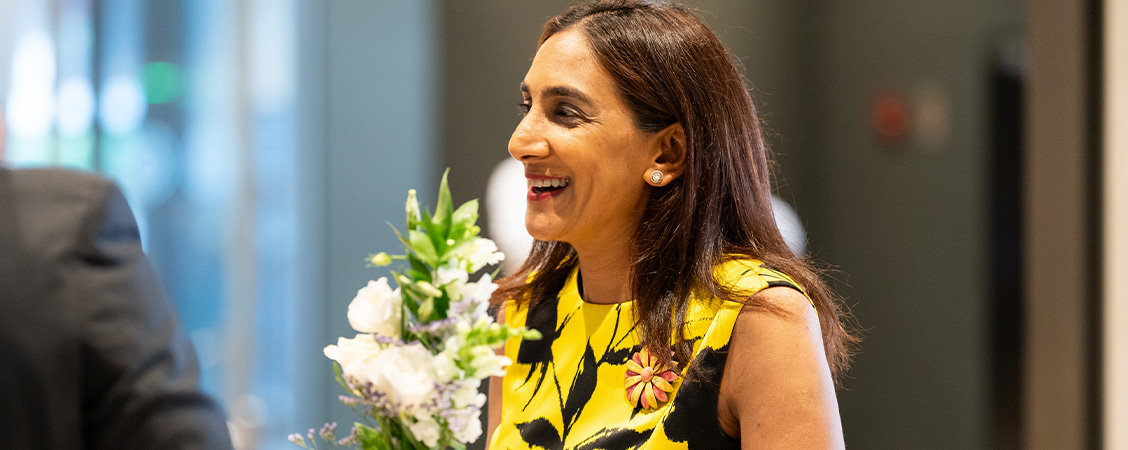
For a few years now we have hosted a Women's Month breakfast that brings together colleagues, clients and young women who are still at school. It never gets old. There is something genuinely energising about having different generations of women in the same room.
Much of the advice you hear during Women's Month follows a similar arc: hard-earned resilience, rising up, advocating for yourself. Incredible women share their journeys and their successes, and we all leave feeling inspired.
That is wonderful, and it is necessary. It feeds the soul. It helps us believe. But it does leave a gap.
It leaves out the part where you are firmly in the messy middle. The fog. The period where you are still in the thick of something hard, you don't know your next move, you certainly have no idea how it ends, and you still need to show up every single day and make good decisions. That part is harder to package, because it doesn't come with a neat ending.
That is what I want to focus on. Not lessons from history, but questions about the present. What actually holds you when you are in the middle of the storm? What does it take to stay the course when the world feels chaotic and your own emotions are a whirlwind? And how do you do that without losing yourself in the process?
WHAT IT ACTUALLY FEELS LIKE FROM THE INSIDE
Let me start with something I don't think we say honestly enough.
When you are a senior leader – or any kind of high achiever – people tend to assume you have clarity. That your years of experience mean you can read every situation accurately, that you know with confidence when you are right, and that you make decisions from a position of settled certainty.
Sometimes that is true. Most times, it isn't.
The reality of navigating a genuinely difficult period is that it is foggy. You are making decisions with incomplete information, under real pressure, often without knowing for some time whether you called it right. That uncertainty is not evidence that you are failing. It is part of what responsibility feels like.
The higher you go, paradoxically, the less often someone will tell you that you are wrong. That sounds like a privilege. It is actually one of the harder aspects of leadership, because you lose some of the feedback loops that used to keep you calibrated.
And in that there is an isolation that is hard to explain. Not because people aren't around, but because the specific weight you are carrying is usually yours alone to carry. You can talk around it, and you can share parts of it, but you cannot transfer the weight.
We so often celebrate the decisive leader, the clear-eyed executive, the person who always seems to know the right answer. But often this is someone who has learned to act well under uncertainty, not someone who has eliminated uncertainty. That distinction matters. If you are young and you look at the senior people around you and think: ‘They seem so sure of themselves, why don't I feel that way?’ That sureness is mostly the art of having become comfortable with discomfort. It is trained, not innate.
The full picture of any sustained achievement includes the discipline and persistence you draw on during the storm, the doubt, and the days when the right path isn't obvious and the solution isn't clear. That is the texture of real responsibility.
WHAT HOLDS YOU
What actually grounds you when you are in the thick of it?
In my experience, it’s not generic statements like ‘stay true to your values’ or ‘do what is right’. Those sound good, but they mean very little if you cannot translate them into something you can use on a hard day.
What holds you is not abstract values, but concrete lines: a clear, non-negotiable sense of what you will and will not do. Not vague commitments but specific decisions made in advance. For me, those include:
- I will not misrepresent reality to make a situation easier.
- I will not throw people under the bus to protect myself.
- I will not compromise on what I know is right for the sake of short-term peace.
Abstract values drift, because under pressure smart people can always find a way to rationalise moving them. Concrete lines are much harder to rationalise away. And in a fog, specific lines are what you hold onto.
Another important aspect is discipline. Not mindset, and not motivation, but the ordinary practices and habits that you hold when both of those fail.
There are days when you are tired, reactive and not at your best. On those days, what holds you is the discipline of the ordinary. It is the way you show up for your team even when you are carrying something heavy. It is answering the difficult email after you have had time to think. It is telling the truth in a meeting when a convenient version would be easier. It is keeping your standards in a small interaction when nobody influential is watching. It is asking for a second opinion before acting on your first reaction.
None of these look impressive. Repeated over time, however, they become character.
Excellence is not a mood. It is what your habits allow you to do on the days you do not feel strong.

Equally important, but often underrated, is having one or two people around you who will tell you the truth. Not cheerleaders who are there to make you feel good, but those who will give you an honest read when you need one, or when you are doubting your own judgement.
These people are rare, and it takes years to build those trusting relationships. But in a genuinely hard period, those relationships are invaluable. If you don't have them yet, start building those relationships now.
WRONG, OR INCONVENIENT?
I want to name something that is specific to every woman reading this, whether you are 17 or 57. Holding your line is innately harder for us and not because we are less capable.
Women are often judged differently when they hold a firm position under pressure. You have to know this dynamic exists before you are in the middle of it. If you walk into a tricky situation without knowing it, you can mistake the external pressure to capitulate for evidence that you might be wrong.
The question I ask myself in these moments is: Am I getting pushback because I'm wrong, or because I'm inconvenient?
Holding a position that is correct but inconvenient will almost always generate resistance – whether you are a man or woman. It is the cost of having standards, not a signal to back down. And in real time, that difference is not always easy to see. So ask the question deliberately, and create the mental space to examine your reasoning honestly. Don’t talk yourself out of your position, but make sure that the position is sound, and not stubbornness dressed up as principle.
LEAVE THE CROWN IN THE GARAGE
Here is something I have come to believe that I genuinely didn't expect, and that I wish I had understood much earlier: holding your line does not mean holding everything.
One of my most important learnings is what to release, both deliberately and consciously, so that I have the energy and the clarity to hold what actually matters.
This can include:
- The need for people to understand your reasoning in real time.
- The expectation that doing the right thing will be immediately visible, or quickly rewarded.
- The desire for approval from those who don't have the full picture, and may never have it.
When you are in the messy middle of something difficult, the energy spent self-managing this is a drain you often cannot afford.
There is a story I have always loved about Indra Nooyi, the former CEO of PepsiCo and one of the most powerful women in global business. On the night she was appointed chief executive, she came home to tell her family…and her mother sent her out to buy milk.
When Nooyi protested that she had just been made CEO of one of the largest companies in the world, her mother told her to leave the crown in the garage. “Inside this house,” she said, “you are a wife, a mother and my daughter. The crown stays outside.”
I love this story. It captures something important about how to survive sustained success and sustained pressure. The crown is real. It represents what you have built, what the world recognises, and what you have earned. But it does not define you. It is external, and it lives outside. If you wear it inside, if you let your sense of self fuse with your title, your reputation, the world's current opinion of you, then a fluctuation in any of those becomes a threat to who you are.
Recognition, in the broadest sense, is what the world thinks of you at any given moment. Character is what you know about yourself when nobody is watching: what you stand for, what you refuse to compromise, whether you behave with integrity when it is easier not to. Recognition is external and temporary. Character is private, cumulative, and yours to protect.
Leave the crown in the garage. Protect what is inside.
BUILD IT BEFORE THE STORM
To the young women in particular: knowing your concrete lines, the discipline of the ordinary, being able to tell the difference between wrong and inconvenient, knowing what to carry and what to release – none of it can be built in the middle of a crisis. It must be built beforehand.
The habits you form growing up are your foundation. The way you approach your studies or your work, the relationships you invest in, the values you test – it is invisible while you are still building it. You won't be aware of this character forming, but it will be there when you need it. And you will need it.
My message to you is to be intentional about who you are becoming in the ordinary moments. Not in the big, visible ones. Those tend to take care of themselves if you have laid the foundation.
Character isn't what you declare. It is what you do when it is expensive. Build it now, and you will be grateful for it later.
THE PART WE DON'T CELEBRATE
For women today, there is genuine progress to recognise and many achievements to celebrate.
But achievement is not only the visible outcome. It is also the periods of uncertainty, the decisions nobody applauded, the standards you kept when it would have been easier to lower them, and the parts of yourself you refused to surrender.
The real test of what you are made of doesn't happen in the good times. It happens in the times that ask something genuinely hard of you. And the women who come through those times – not necessarily intact, not without cost, but with their integrity still in place – are the ones who build something that lasts.
If you take away one thing, let it be this. Other people may misunderstand your choices, and recognition may arrive late, or not at all. Neither determines your worth. The fog is not proof that you do not belong in the room. It is part of what it means to be responsible for something that matters.
You will face storms. The question is who you are inside them.
* This article is an edited version of Kirshni Totaram's address at Coronation's 2026 Women's Month event.


Explore Investment Insights on the global economy, markets and topics related to our business.

Subscribe to our Corospondent newsletter