 South Africa - Institutional




Investment views
Market Watch: Relief, not resolution
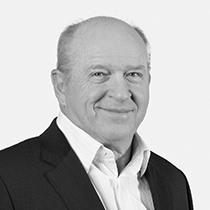
Senior portfolio manager Charles de Kock reflects on a quarter shaped by a de-escalation of the Middle East conflict, a sharp fall in the oil price, and a strong recovery in global equity markets.
The Quick Take
- During the second quarter, the Middle East conflict de-escalated, with an interim agreement signed in June; the oil price fell sharply, and global equity markets recovered strongly
- Global equity returns were not broadly based; gains were driven overwhelmingly by a handful of AI-related semiconductor and technology companies in both developed and emerging markets
- Precious metals stocks gave back some of their spectacular recent gains; our long-standing underweight in this area reflects our view that concentration risk in the JSE remains elevated
- We remain cautious on global sovereign bonds and continue to find value in selected developed and emerging market equities, guided by our long-term valuation discipline
The term “peace dividend” was used in the past to describe a post-conflict period when governments and companies could spend money wisely on productive assets rather than on bombs, tanks and warplanes. Economies could then reap a dividend in the form of faster economic growth, stability and prosperity. The Middle East conflict has de-escalated, the Strait of Hormuz has seen some resumption of traffic under the agreement, and the oil price has fallen sharply, close to pre-war levels. Iran has in turn been given some sanctions relief. Rebuilding damaged infrastructure can then commence and, provided parties adhere to the agreement signed, some form of peace dividend should accrue to this war-torn area.
One must guard against getting too carried away. The agreement remains fragile, and further disruptions along the path to a lasting resolution remain a possibility. The conflict between Israel and Hezbollah in Lebanon has also not been clearly resolved. The other major conflict, between Russia and Ukraine, is still ongoing, but just as the US and Iran found an off-ramp, one expects that an end to the war in Ukraine can be found. A peace dividend should follow the end of this conflict too.
The global economy has, however, suffered some damage. Inflation is higher and has resulted in a tightening of monetary policy in some countries already. The US Federal Reserve had its first meeting under new chairman Kevin Warsh, and sounded more hawkish. Market expectations have shifted from rate cuts to rates staying put or moving higher. I believe rate hikes can still be avoided, but the Fed will, at best keep, interest rates at current levels until there are clear signs of falling inflation or some unexpected weakness in the US economy. The US economy has been stronger than most expected, driven especially by the massive fixed investment spending in the technological and AI-related space.
Stock markets weathered the geopolitical storm well, with the MSCI All Country World up close to 15% in US dollar terms over the quarter. These returns were not broadly based. Both in developed and emerging markets, gains were driven overwhelmingly by a handful of AI-related semiconductor and technology companies. In emerging markets specifically, Korean and Taiwanese chipmakers dominated. The clear take-away is that the AI boom and massive spending on capacity have overshadowed the ill effects of the oil price shock on most markets.
Global sovereign bonds are an area we continue to avoid as the very high debt levels and lack of political will to tackle the problem place upward pressure on yields. Although bond yields have moved higher, we think there is more upside risk as governments continue to borrow heavily despite the already very high stock of outstanding debt. Increased spending on defence by all NATO countries will need to be funded by even greater government borrowing, while spending on social needs is always politically very difficult to reduce. Managing the fiscal deficits of most major countries seems a very difficult task for politicians seeking election. As investors we can, however, reflect these concerns in our portfolios by allocating zero or very little to this asset class.
In South Africa, gold and platinum stocks have given back some of the spectacular gains of last year. Share prices are still up on a twelve-month view but down sharply over the past quarter with the JSE precious metals index declining by 23% during the quarter. We have been far lighter than the index in precious metals over the past year and warned in this commentary in the first quarter that the South African stock market carries excessive concentration risk with its heavy precious metal weighting. We cannot justify the index’s high weight in these stocks.
Our multi-asset funds, with their heavy exposure to global equities, benefitted from the strong performance in global markets. We find excellent value in many developed and emerging market stocks and consequently maintain our current stance. We unfortunately think the South African economy is trapped in a low growth rut where careful stock picking to find the winning businesses is required. The recent sharp decline in the oil price will hopefully persuade the Reserve Bank to pause on further rate hikes, but the 3% inflation target looms large and further tightening cannot be ruled out.
Over the long run markets are driven by the fundamentals of earnings growth, but one cannot ignore the role of sentiment. The peace dividend has provided a positive boost to market sentiment, though the path to a lasting resolution remains uncertain.


Explore Investment Insights on the global economy, markets and topics related to our business.

Subscribe to our Corospondent newsletter